
Blog
How to Read the Part Number Molded on the Back of Your Center Cap
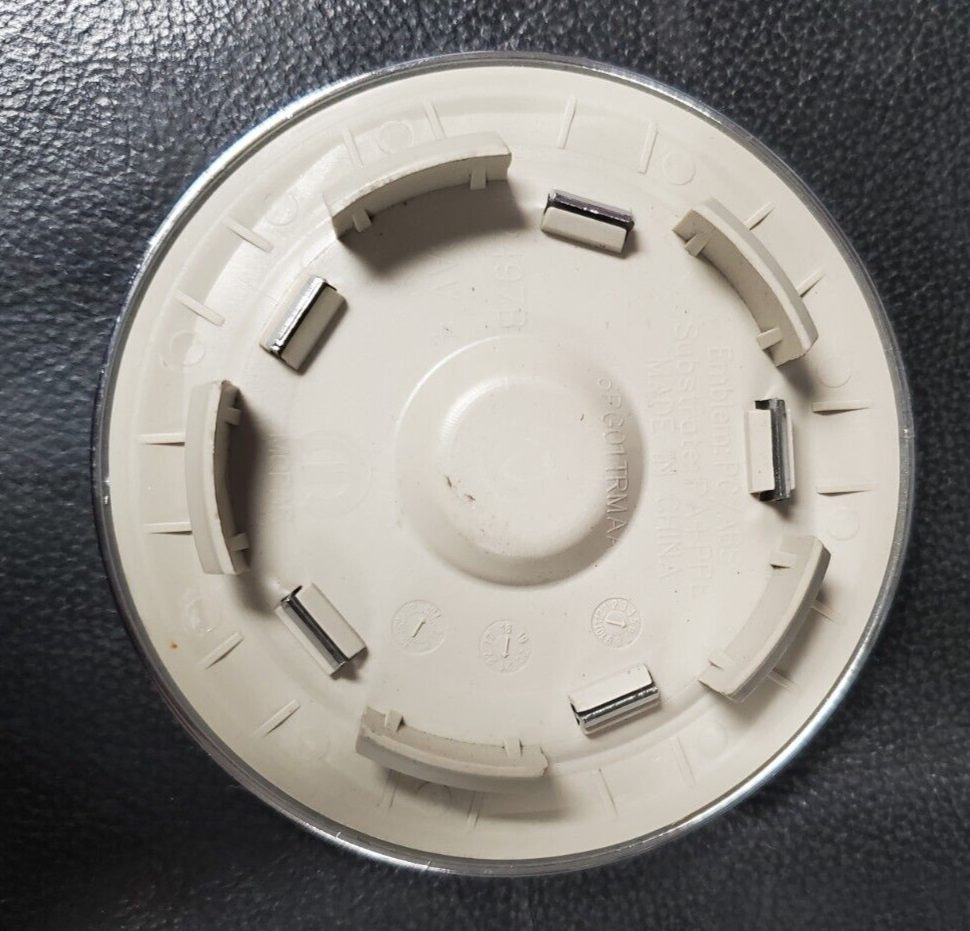
Every fitment argument on this site ends the same way: with a measurement and a part number. The measurement takes a caliper. The part number is even easier — the manufacturer molded it into the back of your cap at the factory, free of charge, and it identifies the exact part more reliably than any vehicle badge, model year or listing title ever will. Here's how to use it.
Where to look
Pop the cap and turn it over. The number is usually raised or stamped into the plastic near the center or along the rim, sometimes alongside size markings and a manufacturer logo. It can be faint — raking light from a phone flashlight at a low angle makes raised lettering readable. Clean the road grime off first; a decade of brake dust hides a lot of digits.
What the numbers look like across brands
Every maker formats differently, and the families documented on this site show the range. GM truck caps carry plain numeric numbers — 22837060, 20942002. Ford mixes letters and digits: CL3Z1130B for a 3-inch F-150 cap, YL34-1A096 for the big lug-cover caps. Jeep's modern family is the 1LB77 series. Volkswagen: 3B7601171. Honda and Acura share the 44732 series (44732-S9A-A00, 44732-SY8-A100). Audi: 4B0601170. Nissan runs 40343- and 40342- prefixes. Subaru: 28821SA030. Lexus: 42603-30590. Hyundai and Kia share a 52960-xxxxx pattern. Cadillac cars: 23212548. Dodge's Charger/Challenger cap: 6CZ27RXFAA. You don't need to memorize any of these — you need to recognize that they exist, and that yours is on your cap.
How a number settles fitment
Search the number exactly as molded, in quotes if your search tool allows. Listings and parts catalogs keyed to that number carry the dimensions the number represents — which is how the sourced sizes on this site were verified. A number also exposes supersessions: manufacturers revise parts, and a seller cross-referencing an older number to a current one is showing you their homework. Listings with no number and no dimensions are asking you to fund a guess.
When there's no number to read
Numbers wear, caps get replaced with unmarked aftermarket pieces, and sometimes the cap is simply gone. Then the number's job falls to the caliper: OD across the face, clip ID across the clip tips, clip depth from base to tips. That trio, matched against the sourced families in the Cap Finder, identifies most caps nearly as well as a molding does. The full technique is on the How to Measure page.
Disclosure: this site stocks nothing and sells nothing directly — we earn on referrals, not on parts. Where we mention dealers or marketplaces, any shopping link that becomes an active affiliate link may pay us a small commission at no extra cost to you. That model is exactly why our advice starts with a caliper instead of a checkout button.
Related guides
- How to Measure Wheel Center Cap Size
- Volkswagen Center Cap Sizes
- Honda & Acura Center Caps — the 44732 Family
Next steps
Run your numbers through the Cap Finder, or re-check them with the How to Measure walkthrough before you order.
Shop this fitment on eBay Cap Concierge — we find your cap
Disclosure: shopping links are plain eBay searches today; when our eBay Partner Network links activate, purchases through them may earn oemcentercaps.com a commission at no cost to you. Advertise on oemcentercaps.com
Sources: Part numbers and their associated dimensions as documented in this site's research notes: GM, Ford, Jeep, Volkswagen, Honda/Acura, Audi, Nissan, Subaru, Lexus, Hyundai/Kia, Cadillac and Dodge OEM listings cited throughout the brand guides on this blog. Verify by measuring.