Do This Before You Order
How to Measure Your Center Cap
You need one tool: a caliper. A digital caliper costs less than one wrong set of caps, and center cap sizing is metric — always measure and record in millimetres. A tape measure or ruler isn't accurate enough; a 1 mm error is the difference between a cap that locks and a cap that leaves.
Step by step — with the old cap in hand
- Pop the old cap out. Work a plastic trim tool behind the edge and ease around the circumference. A flathead screwdriver wrapped in cloth works too — bare metal on a painted wheel leaves scars. Many caps also push out from behind with the wheel off.
- Read the back first. Factory caps usually have a part number molded into the back (GM numbers look like 22837060; Ford like CL3Z-1130-B; Honda like 44732-S9A-A00). Write it down — it's the single most reliable ordering reference you have.
- Measure the outer diameter (OD). Cap face-up on a flat surface. Caliper jaws across the widest point of the face, edge to edge. Record it in mm (a "3.25 inch" GM truck cap = 83 mm).
- Measure the clip diameter (ID). Flip the cap over. Measure across the tips of the two farthest opposing clips — the widest spread of the clip circle. This is the number that must match your wheel's opening. If your cap uses a spring/wire ring instead of clips, measure across the ring where it seats.
- Measure the clip depth. From the back of the cap face to the end of the clips. Note it especially on domed or deep-dish wheels, where a cap can bottom out on the axle nut before the clips engage.
- Count the clips and note the style. Count every clip around the back (common counts run 4–12), and note whether there's a spring ring, screw holes, or a push-through flange. A replacement with a different count or style may share your diameters and still not lock in.
- Compare all five facts before ordering: OD, clip ID, depth, clip count/style, and part number. Match on ID and part number first.
Cap already lost? Measure the wheel.
No cap, no problem — the wheel keeps the evidence:
- Measure the opening. With the wheel clean, run the caliper's inside jaws across the center-bore opening where the cap sat. That diameter is what the cap's clip ID must match.
- Measure the depth of the bore. From the wheel face down to the retention groove or shoulder inside the bore — your cap's clip depth has to work with it.
- Check a second wheel. Odds are one of your other three caps survived. Pop it (carefully — it's now your master sample) and measure it instead; it's more reliable than the bare wheel.
- Cross-check by part number. A dealer parts counter can pull the correct cap part number from your VIN. Even if you buy elsewhere, that number is gold for matching listings.
Don't guess from the hub bore. The wheel's hub center bore (the big hole that centres the wheel on the hub — 78.1 mm on a Silverado, 87.1 mm on an F-150) is not your cap size. The cap opening is a separate, usually smaller, machined diameter. See the Fitment Guide for the full explanation.
Quick conversions
| Inches | Millimetres | You'll see it on |
|---|---|---|
| 2.16″ | 55 mm | Jeep Liberty / older Grand Cherokee caps |
| 2.44″ | 62 mm | Toyota Camry / Corolla caps |
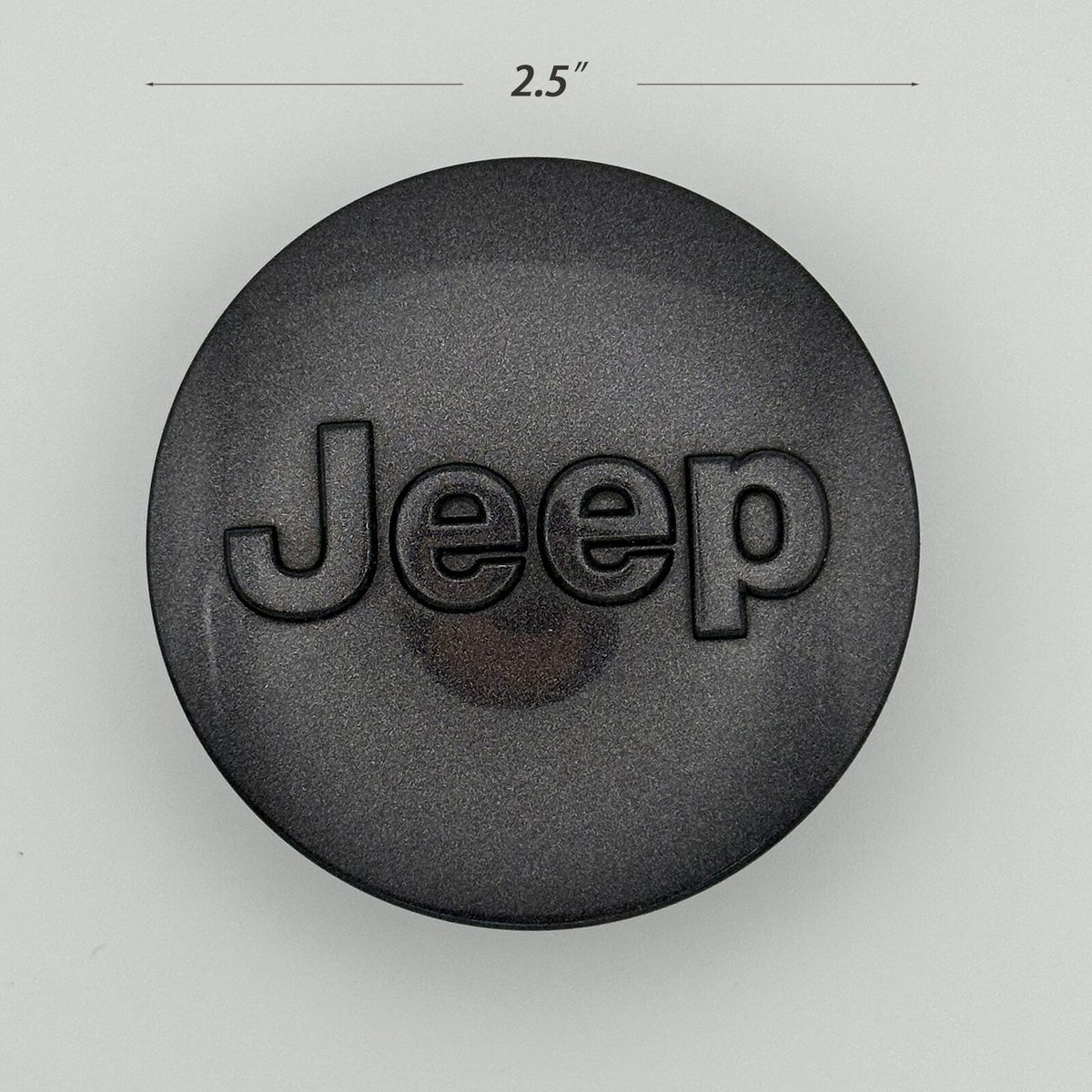
| 2.5″ | 63–64 mm | Jeep 1LB77-series caps (ID 2.5″) |
| 2.68″ | 68 mm | BMW caps, many models |
| 2.72″ | 69 mm | Honda / Acura caps, many models |
| 2.91″ | 74 mm | Mercedes-Benz caps |
| 3″ | 76.2 mm | F-150 2012–14 20″ wheel cap (listed as 3″) |
| 3.25″ | 83 mm | GM full-size truck/SUV caps 2014–2024 |
Measured yours? Head to Where to Buy with your numbers and part number in hand.